Tag Archives: AI
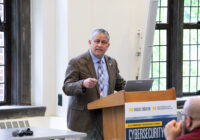
Securing What Comes Next: Cybersecurity Leadership in the Age of AI
Center for Academic Innovation announces events on AI, online education, future of learning
What It Means to Build Now: AI Dev Day 2026 Recap
Join the 2026 AI & Health Symposium
K-12 Emerging Technology Summit: Cybersecurity and AI
The Marsal Family School of Education and Information and Technology Services (ITS) co-hosted the all-day event for Michigan K-12 superintendents and IT professionals to engage with and learn from U-M experts about their shared experiences in the current digital landscape and how to ethically and responsibly meet the moment.
Upcoming Vulnerability Management (DS-21) Changes
Artificial Intelligence is rapidly changing the sphere of cybersecurity threats to IT infrastructures. The number of attacks targeting the university is increasing, while the time between identification and exploitation is decreasing. ITS Information Assurance (IA) is cognizant of the shifting threat landscape and is finalizing updates to the Vulnerability Management (DS-21) standard. Vulnerability management is a critical component of… Read More »
New Resource: Appropriate Use of AI Services
Q&A with CIO Kerry Flynn: How Ross IT Supports the Evolving Technology Needs of the School
Technology supports nearly every part of the work being done at Michigan Ross — from the admissions process and classroom instruction to day-to-day troubleshooting, events, major school projects, and more. Chief Information Officer Kerry Flynn shares how Ross IT supports the Ross community, what major projects are ahead, and how the team is helping the school adapt to evolving… Read More »
AI Summit Explores Challenges and Opportunities for “Leaders and Best”
AI Privacy News Roundup
When the Data Already Exists: Building Clinical Operations Tools from the Inside Out
Across healthcare administration, a quiet inefficiency persists. Critical decisions about provider schedules, workforce planning, and clinical coverage get made from spreadsheets, manual exports, and institutional memory — not because the data doesn’t exist, but because no one has built a bridge between raw data and the people who need to act on it. At the University of Michigan’s Division of Pulmonary and Critical Care Medicine and Allergy, that bridge is now being built from the inside out.