
Category Archives: Campus News

Got some news to share, or know someone who deserves a shout-out? Let us know! (You must be logged in with your UMICH Level-1 password to access the form.) Subscribe to the Campus News RSS feed.

Election security flaws

By | January 14, 2017

Given the concern with electronic hacking this past election, old-fashioned paper ballots might seem more reliable. But after listening to computer science Professor J. Alex Halderman and doctoral student Matt Bernhard discuss the recent US election at the Chaos Communications Congress, even paper ballots might not provide much reassurance about election outcomes. Although their analysis of recounts in Michigan… Read More »

Most popular emojis

By | January 13, 2017

Researchers at U-M and Peking University analyzed 427 million messages from nearly 4 million smartphone users in 212 countries and regions to see if emoji use was universal or differed based on user location and culture. They discovered the most popular emoji worldwide is… face with tears of joy, which accounted for over 15% of total symbols seen in the study.… Read More »

Safe Exchange Zone

By | January 13, 2017

Although rare, armed robberies and violent incidents have occurred during the exchange of online transactions. While the overwhelming majority of online transactions occur without incident, the Division of Public Safety and Security is committed to providing a secure environment for U-M community members and recently established a “Safe Exchange Zone” in the front lobby of the U-M Police Department… Read More »

Cleared for take-off

By | January 7, 2017

A U-M alum is striving to take the turbulence out of getting passengers to their planes on time. Caryn Seidman-Becker is CEO of CLEAR, which helps airline passengers at participating airports confirm their identity through biometric scanning of either their fingertip or iris. Customers sign up with CLEAR in advance and have their identification digitally authenticated. Then they… Read More »

Cutting the cord

By | January 7, 2017

There is a transformation happening in U.S. television as more companies distribute content over the internet and more viewers move away from live, network-scheduled viewing. Internets streaming services offer many popular channels currently available from cable and satellite services. Bundled channel packages streamed over the internet “are meant to compete with cable or satellite, and some have called them ‘skinny… Read More »

The code of the heart

By | January 7, 2017

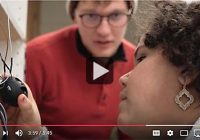
Computer science and engineering students at U-M partnered with visually impaired high school student India West to develop technologies that may help other blind and visually impaired people navigate the world around them. David Chesney, a lecturer in electrical engineering and computer science, leads the effort, which is featured in this video. Read more about the project.

Advocating for open access

By | December 19, 2016

Melissa Levine, the lead copyright officer at the U-M Library and ex officio member of the library’s open access committee, co-authored an article advocating open access publishing as a way to speed up scientific discoveries and advances in technology. “If published research and data were freely accessible and reusable by researchers of diverse interests, urgently needed solutions could be… Read More »

Happy accidents

By | December 19, 2016

A group of researchers including Josh Ackerman, an assistant professor of psychology at U-M, believe you might be “accidentally” breaking your phone, on purpose, to justify getting a new one. It’s a phenomenon called the “upgrade effect” and according to the study, that’s exactly what we’re doing.The study found that even when people think they aren’t being careless or deliberate… Read More »

Cracking open Facebook

By | December 16, 2016

Facebook, with 1.79 billion monthly active users, has emerged as the main engine for “fake news.” Researchers say they’d like to help Facebook get to grips with its problem. But if you want to work with Facebook’s data, you usually have to become a contractor, work at its campus in Menlo Park, and agree to the company’s terms on what… Read More »

Lessons in digital citizenship

By | December 15, 2016

Students and faculty from the School of Education are working with students at Scarlett Middle School in Ann Arbor to help them become good digital citizens, and so they can become ambassadors for others in their school. Watch the video below to learn how the program hopes to foster civility and respect online.

Medical misinformation

By | December 15, 2016

“Fake” news is not limited to politics or celebrity gossip. A study by Ceren Budak, an assistant professor at the School of Information, shows that the most popular health stories on social media may also be the least accurate. For example, four out of five popular posts on Facebook about Zika contained accurate information, but the ones containing… Read More »

Water app offers essential info

By | December 15, 2016

A team of researchers on the Ann Arbor and Flint campuses have developed a new Android app to help Flint residents during the ongoing water crisis. MyWater-Flint is an interactive guide that lets people pinpoint homes with a greater risk for lead, and also shows where lead has been found in city water. Users can see where pipes… Read More »

Ideas2017 Challenge

By | December 15, 2016

As part of this year’s Academic Innovation Initiative, the Office of Academic Innovation has challenged the U-M community to contribute more than 2,017 ideas about how we should transform education at Michigan. Visit the Ideas2017 Challenge website and enter a tweet-sized idea (or bigger). While you’re there, browse through ideas that have been submitted.

“Speed dialing” API calls

By | December 15, 2016

When Canvas API calls began to bog down Student Explorer—an application that serves as an early warning system for academic advisors—Information and Technology Services (ITS) and the Digital Innovation Greenhouse (DIG) worked with Unizin to reduce data processing time by half with the Unizin Data Warehouse. Read the case study (PDF) to learn about their solution to provide reliable data… Read More »

Bermann named interim CISO

By | December 15, 2016

Kelli Trosvig, U-M’s new vice president for IT and chief information officer (VPIT-CIO) as of November 14, has named Sol Bermann as the university’s interim chief information security officer (CISO). Bermann served as interim CISO prior to Don Welch’s arrival and continues to serve as U-M’s privacy officer.

Fast times at SC16

By | December 15, 2016

Kudos to Ben Meekhof (ARC-TS), and Dan Kirkland and Dan Eklund (ITS) for their support of U-M faculty and staff presenting at SC16, a supercomputing conference hosted in Salt Lake City, November 13–17. The team established a dedicated 100G path from U-M to the SC16 conference center as well as high-speed paths from Indiana University, Michigan State University, and… Read More »

Securing the IoT

By | December 15, 2016

After recent attacks threw the rampant insecurities of internet-connected cameras, video recorders, and other gadgets into sharp relief, Washington lawmakers and officials are urging tech firms to do more to secure the Internet of Things. At a House Energy and Commerce subcommittee hearing last month, lawmakers said the attacks raised national security concerns and questions about the need… Read More »

How to hack a human

By | December 15, 2016

A recent article published in Communications of the ACM examines the chronology of medical device security. The paper is the result of an interdisciplinary project, known as Trustworthy Health and Wellness, which is funded by the National Science Foundation. Peter Honeyman, U-M research professor of computer science and engineering, collaborated on the article. Learn more.

Lighting the past

By | December 15, 2016

Archaeologists in northern Michigan have used pulses of light shot from airplanes to double their discoveries. This remote sensing technology is called light detection and ranging, or lidar. Lidar sends out a pulse of light that returns a measure of distance from the object it strikes. It can greatly improve the efficiency of archaeological searches particularly when scanning… Read More »