
Author Archives: News Staff
Software changes business accounting
A good accountant is hard to find. Some companies are avoiding the search by replacing human bean counters with computer software. The increasing use of software is also changing how students and schools are approaching accounting education, according to Cathy Shakespeare, faculty director for the masters of accounting program at U-M. She said basic bookkeeping skills are becoming… Read More »
Moving from paper to online grading
Gina Brandolino, an instructor in the Sweetland Center for Writing and the English Language and Literature department, wanted to move from grading physical papers to using online tools, but she wanted to preserve her ability to hand write comments as opposed to typing inline comments. An LSA-ISS Teaching Transformed grant enabled her to spend a summer adapting her work… Read More »
Fixing digital discrimination
Recent research suggests that racial bias can have a measurable impact on internet-based, sharing services like Airbnb. For example, a 2014 study from the Harvard Business School revealed that non-black Airbnb hosts can charge 12 percent more than black hosts for a similar property. To curb discriminatory practices, the study authors recommend concealing basic information, such as photos and names, until… Read More »
New models of online education
Scott DeRue, dean of the Ross School of Business, thinks higher ed needs a new business model. DeRue’s vision is akin to Spotify’s offering to music fans, with users able to download lectures and teaching material for a small subscription fee. The dean is relaxed about giving away some teaching material for free as now happens with MOOCs. However,… Read More »
App helps patients with medical decisions
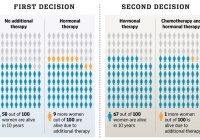
Brian J. Zikmund-Fisher and his colleagues at U-M developed a web-based application that allows health-care providers and researchers to create icon array graphics that help patients make informed decisions about their care. Their research found that presenting information in such formats can help patients better understand their treatment options and the associated benefits and risks. His research also… Read More »
Saving the truth
Recently, BBC Future Now launched a series about the grand challenges we face in the 21st Century. Many on their panel of experts named the breakdown of trusted sources of information as one of the most pressing problems today. Among them was Paul Resnick, professor of information at U-M. Working out who to trust and what to believe has always been… Read More »
AI: What could possibly go wrong?
When it comes to coming up with dystopian visions of the future, researchers in artificial intelligence can match even the best science fiction writers. Just ask U-M computer science professor Michael Wellman, who dreamed up a stock-market manipulation scenario for a recent AI doomsday workshop which took place at Arizona State University with funding from Tesla Inc. co-founder Elon Musk… Read More »
Bulletproof backups
Nue Lee, a PhD student in Higher Education at U-M, details a comprehensive, three-layered back-up storage approach she uses to make sure her academic work is protected. “No one likes to talk about it, because it may be admitting that you don’t do it,” writes Lee, “but as graduate students, we must have a dedicated backup system.” Lee recommends grad students… Read More »
What’s in a meme?
Around 2010, the meme began to take off as a pervasive mode of digital communication and soon became a source of merchandising and commercialization. Some of it even benefited the meme creators. But however egalitarian the internet was supposed to be, creatives’ ability to profit off their viral content seems to depend on their race. André Brock, who teaches race,… Read More »
Recreating Black Bottom
From World War I through the 1940s, the Black Bottom neighborhood was the heart and soul of Detroit’s African-American community. Then, in the early 1950s, the area was bulldozed in the name of “slum clearance” and eventually replaced with the Chrysler Freeway and Lafayette Park. Emily Kutil, a Detroit architect with a master’s degree in architecture from U-M, hopes to help… Read More »
Waze and means
Waze, the crowdsourced traffic and navigation app owned by Google is joining the SmartDeviceLink Consortium and working with automakers and developers on open source protocols for connecting smart phones to car dashboard screens. This gives Waze—and therefore Google—a lot more data about you, your habits, and your car. This kind of info collection might worry some users. But Erik Gordon, who studies… Read More »
IT4U webinar: My LINC Tips & Tricks
Thursday, March 16; 9-9:45 am. Online. My LINC offers a wealth of resources–from eLearning courses to step-by-step procedures. Jeanne Mackey (ITS) offers tips for streamlining navigation and searches and avoiding typical My LINC “gotcha’s.” Register.
Engaging Ideas & Appetizers
Friday, March 24; 1–3 pm; LSA-ISS Media Center, 2001 Modern Languages Building. Do you want to find new ways to engage students but don’t have a lot of time to search? LSA’s Instructional Support Services-Learning Technologies & Consulting Group (ISS-LTC) is excited to show you six innovative ideas in less than two hours. Each session will last 15 minutes and run several times throughout… Read More »
Encouraging today’s “Hidden Figures”
The film Hidden Figures has taken not only the box office by storm, but the education world as well. Studies show that female and male students actually perform equally well in mathematics and science on standardized tests, but larger gaps exist between students of different racial and ethnic backgrounds or family income. Research by U-M professor emerita Jacquelynne S. Eccles points… Read More »
Dissonance Series – Privacy & Security Challenges in Investigative Journalism
Wednesday, March 22; 5:30–6:30 pm; Michigan League, Henderson Room. Join Knight-Wallace Fellows Bastian Obermayer and Laurent Richard as they discuss their work in investigating and reporting on the Panama Papers and Luxembourg Leaks. This discussion will focus on the privacy and IT security challenges in engaging in this high-profile, international investigatory journalism. Admission is free. Light refreshments included. The… Read More »
Reminder: March 6 M-Pathways upgrade
UPDATE 3/2/2017: The M-Pathways PeopleTools 8.55 Upgrade for HRMS was canceled due to issues encountered during final testing. A new date for the upgrade will be announced soon. ITS is upgrading the PeopleTools technology behind M-Pathways to version 8.55. This upgrade will bring a new look and feel to navigation within M-Pathways. This change will impact everyone who… Read More »
Building a better brain
Most of the advances in artificial intelligence have been focused on solving specific data-intensive tasks like playing chess or diagnosing tumors. However, the kind of general artificial intelligence that would create systems with human capabilities like understanding language and adapting to changing conditions are still a long way off. John Laird, professor of electrical engineering and computer science, says the strategies that… Read More »
AI improves tumor diagnosis
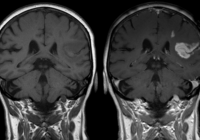
A study by researchers from the U-M Medical School and Harvard University indicates the use of advanced machine learning for diagnosing brain tumors cuts the time needed for diagnosing tissue by 90 percent while maintaining considerable accuracy. Normally, diagnosing a brain tumor takes about 30 to 40 minutes, during which doctors would need to leave the operating room to put the… Read More »
Integrity of voting systems still a concern
J. Alex Halderman, professor of computer science and engineering, received a lot of media attention in the days after the 2016 presidential election for voicing concerns about the integrity of electronic voting systems in the U.S. In this extensive interview with The Chronicle of Higher Education, Halderman, director of U-M’s Center for Computer Security and Society, contends that the initial reports… Read More »