
For many, the Sindecuse Museum of Dentistry brings to mind rows of artifacts behind glass with small printed labels.
That version of the museum still exists, but it’s no longer the whole story. Today, the space uses tech to create a more intentional and interactive experience for curious visitors.
A layered experience, not just a display
Tamara Barnes, the museum’s director, recalls that when she first started in the role the exhibits were largely static. Information lived on labels, and every visitor received the same experience.
That’s changed.
“That’s been the fun part,” she says. “We’ve been able to add so much more content through the kiosk.”
Interactive kiosks now sit alongside artifacts, offering layers of information that visitors can choose based on their interest. Some may want deeper history. Others might be drawn to personal stories or images tied to the objects.
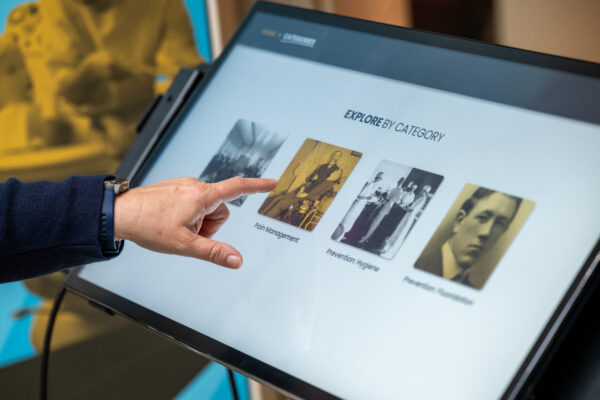
“An endless possibility,” she adds, describing how content can expand without overwhelming the physical space. The experience adapts to the person, not the other way around.
Technology, with an off switch
What’s notable is that technology hasn’t taken over the space. Barnes is thoughtful about balance.
That balance shows up in hands-on activities, especially for children. In fact, the museum wasn’t always designed with them in mind.
“Before I got here, I think it actually said on the website that it wasn’t suitable for children,” she says. “We’ve made a big effort to add hands-on activities.”
Visitors might come across everything from historical dental tools to more unexpected exhibits, like teeth modification, alongside the stories that give them context. “Our museum is just a lot of eye candy,” she says. “If you don’t want to be on a screen, there’s also a lot to see.”
Accessibility, beyond compliance
Accessibility shows up in expected ways with contrast, font choices, physical access to kiosks. But Barnes describes something deeper.
“The other big thing … I would call it psychological accessibility.”
The main exhibit used to sit behind glass, creating distance between visitors and objects.
“We took out the glass so that now you literally are standing right in front of the object,” she says. “It feels like you’re supposed to be there.”
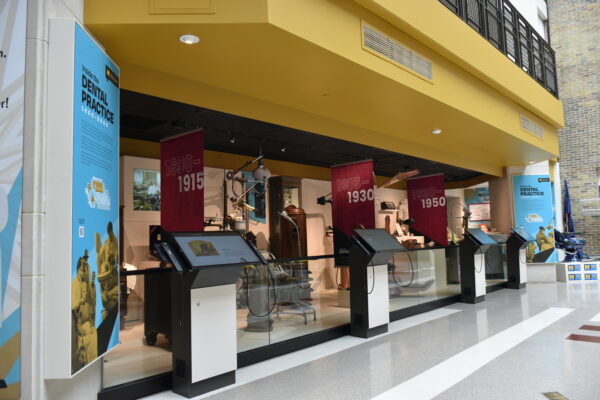
All photos courtesy Sindecuse Museum of Dentistry
Lighting was improved. Displays were simplified.
“You have to remember it’s sort of less is more,” she explains. “Otherwise, it just sort of feels like grandma’s attic.”
Even the writing has shifted.
“We have a whole public that comes in that doesn’t know anything about dentistry,” she says. “Making sure our text is written at a level that’s more for the general public, that’s a big one.”
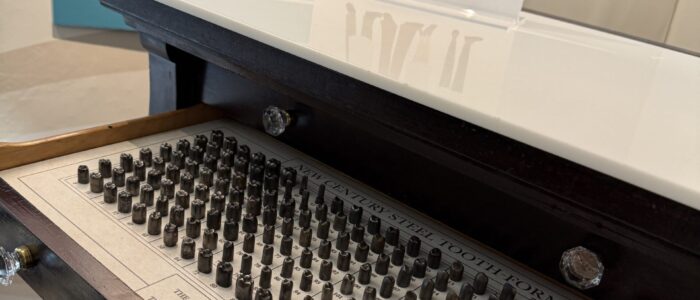
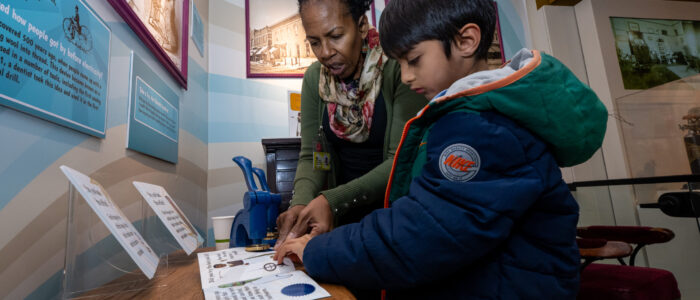
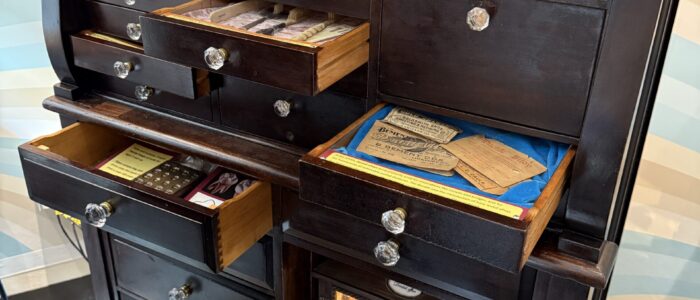 The museum offers tactile displays and interactive components.
The invisible tech behind the scenes
Some of the most impactful technology isn’t visible at all.
“We have climate monitors now that are all over the place that upload directly to the cloud,” Barnes says. That means staff no longer need to manually check conditions.
“We can see from home if the temperature drops or the humidity rises… it’s a big time-saver, and it’s more accurate.” The result is better protection for the museum’s collections without adding anything new to the visitor’s cognitive load.
A niche space for innovation
Museum technology doesn’t come neatly packaged. “There aren’t any software companies that really have picked it up as a niche thing,” Barnes explains. Instead of the newest tools, the museum relies on adapting what exists.
“He’s able to take what’s out there and really retrofit it for the specific need,” she says of exhibit developer Thomas Howes, a trusted collaborator from her previous museum who now builds custom solutions for the space.
What’s next
Looking ahead, the museum is still exploring what’s possible. “We’re really just starting to use technology,” Barnes says.
Future ideas include expanded digital content, more use of archival media, and custom presentations for group visits.
Even small barriers, like needing to sign into Wi-Fi before using QR codes, can be enough to keep visitors from engaging with digital content at all. “It’s getting people to take that extra step,” she notes.
Tucked into the older Kellogg section of the building, the museum isn’t always easy to find. “Our biggest challenge is that people don’t know we are here,” Barnes says, and it’s something she’s working to change.
For a community interested in how technology shapes learning, design, and experience, the museum invites a closer look.
Sindecuse Museum of Dentistry
1011 N. University – G565
Ann Arbor, MI


