K-12 school systems and higher education institutions face similar challenges as they strive to keep pace with rapidly evolving cybersecurity threats and emerging technologies, such as AI.
The Marsal Family School of Education and Information and Technology Services (ITS) co-hosted the all-day event for Michigan K-12 superintendents and IT professionals to engage with and learn from U-M experts about their shared experiences in the current digital landscape and how to ethically and responsibly meet the moment.
Elizabeth Birr Moje, dean of the Marsal Family School of Education, provided important context when she opened the event, “We don’t want to wrap all the attention around the problems of cheating with AI. We’re excited about the potential to improve learning with AI tools and committed to partnering to solve problems that occur over time.”
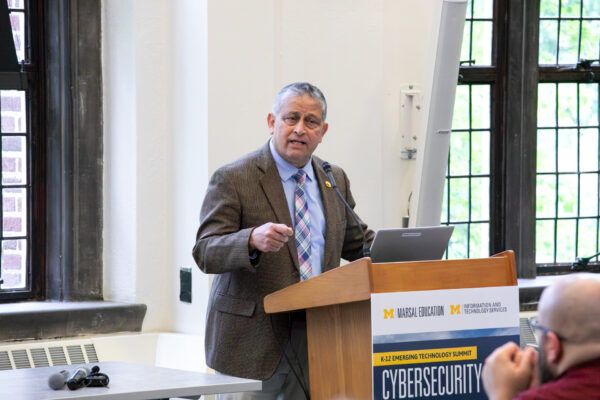
Dr. Ravi Pendse, vice president for information technology and chief information officer, emphasized that trust is fundamental to both cybersecurity and AI. “Trust is at the heart of both cybersecurity and artificial intelligence. AI can strengthen our defenses and be a force for tremendous good, but only when it is used ethically, responsibly, and with sound human judgment.”
Generative AI in the Classroom
In the morning, Ben Andries, Monica Hickson, and Jen Wilkerson of the ITS Emerging Technology team presented on the fundamentals of AI in K-12 environments, covering topics such as policies, community engagement, and AI vendors.
When asked, participants said they wanted to learn how they could prepare their K-12 students to use AI effectively when they get to college. Wilkerson gave practical advice on writing effective prompts with generative AI using four key components – role, task, context, and format.
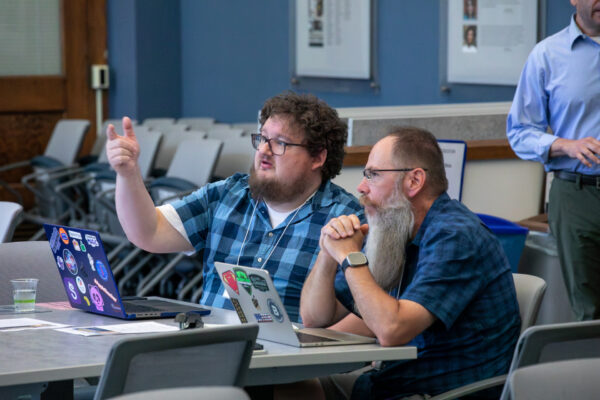
The conversation then shifted to pedagogy. Jennifer Love of ITS Teaching and Learning discussed the possibilities for AI in the classroom, while addressing concerns around cognitive offloading. She emphasized how AI integration requires a shift to more incremental assessments throughout the learning process, rather than focusing on an end goal, in order to produce meaningful education for students.
Cybersecurity for K-12
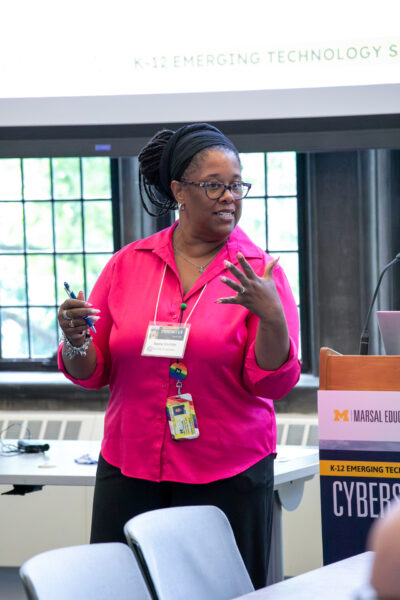
In the afternoon, Asmat Noori, Sasha Womble, and Aaron Hudeck of ITS Information Assurance led interactive cybersecurity sessions. Hudeck set the stage by walking through threat actors’ motivations and common cybersecurity challenges of K-12 schools.
Womble then facilitated tabletop exercises that allowed participants to practice what to do in the event of a disruption in technology services. The groups discussed who would handle communications, how daily processes would be carried out without technology, and when to alert families.
A Shared Responsibility
In the final session, “Preparing for the Never-Ending Journey,” Hudeck stressed the importance of incident response planning and improving awareness for educators, staff, and families. This final session conveyed that cybersecurity is a constant effort that is maintained through strategic, daily decisions and the responsibility cannot fall on one person or individual team.
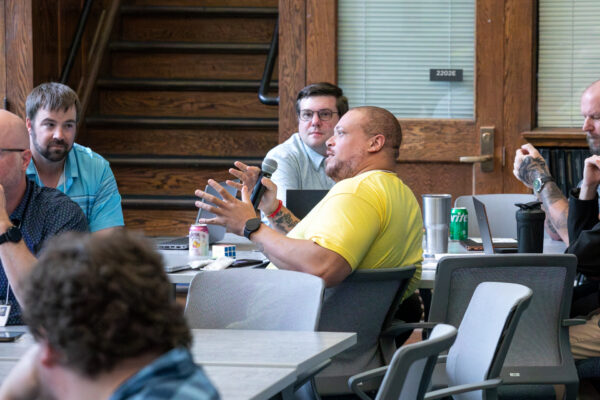
The event created space for K-12 professionals to have conversations with U-M experts about common challenges and opportunities with AI and cybersecurity. It exemplified the university’s mission-driven commitment to serving the State of Michigan by advancing knowledge and providing enduring service.


