
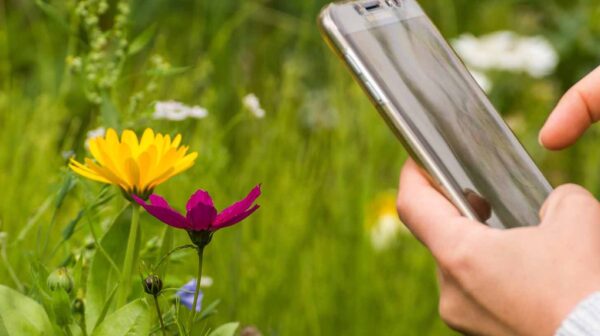
Biologists and plant enthusiasts now have the power of Michigan’s most complete plant identification guide in the palm of their hands.
University of Michigan researchers and research software engineers have developed the Michigan Flora mobile app, a plant identification app that will draw from the Michigan Flora Online website, hosted and curated by the U-M Herbarium.
The website is a continuously updated successor to the Field Manual of Michigan Flora, a comprehensive guide to plants that grow in Michigan. The Michigan Flora was originally published in a series of three volumes in the 1970s, ’80s and ’90s, and then consolidated and republished as the Field Manual of Michigan Flora in 2012. It allows users to identify plants and includes plants’ scientific names, habitat, whether they’re native to the region, and maps that indicate in which counties plant species are found.
The website is a continuously updated successor to the Field Manual of Michigan Flora, a comprehensive guide to plants that grow in Michigan. The Michigan Flora was originally published in a series of three volumes in the 1970s, ’80s and ’90s, and then consolidated and republished as the Field Manual of Michigan Flora in 2012. It allows users to identify plants and includes plants’ scientific names, habitat, whether they’re native to the region, and maps that indicate in which counties plant species are found.

Brad Ruhfel
Now, researchers as well as citizen scientists will be able to access the plant identification benefits from their phones using the Michigan Flora app, even when they don’t have internet service, says U-M Herbarium research collection manager and assistant research scientist Brad Ruhfel.
“The website was a huge step forward, but there was a roadblock to using it in the field. If you don’t have Wi-Fi or cell signal, you can’t use the flora website,” he said. “A lot of people who use this resource are out in the field identifying plants in places where you don’t have an internet connection. So, we’re excited for professionals, amateurs, students and everybody in between to be able to use it a little bit more easily, for free.”
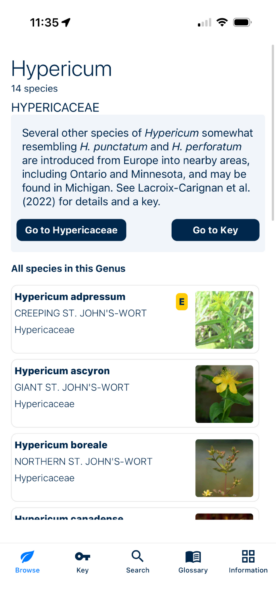
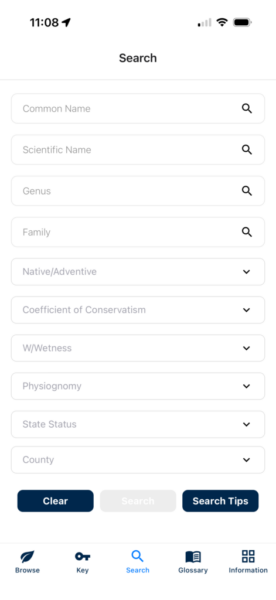
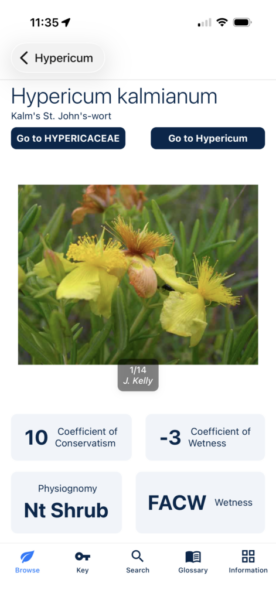
The app was developed by the U-M Herbarium researchers, who worked with the Research Software Engineering group within the College of Literature, Sciences, and the Arts Technology Services to engineer the app.
With the app, the user can identify plants based on their physical features or they can look up plants by their common or scientific names. Like the website, the app will contain information about where a plant grows, photographs, its habitat, whether it’s native, and in what kinds of conditions it grows.

Anton Reznicek
Anton Reznicek, a U-M botanist who was integral in developing the Field Manual of Michigan Flora, says the app will also open access to Michigan Flora to a wider audience.
“Most young people work with their phones—so this makes the flora more usefully accessible to a broader array of people, including the general public, who might not buy the book or necessarily use the website,” said Reznicek, research scientist emeritus and curator emeritus of vascular plants at the U-M Herbarium and the Department of Ecology and Evolutionary Biology.
Ruhfel expects U-M students to use the mobile app as well as researchers and scientists from groups such as Michigan State University’s Michigan Natural Features Inventory, which catalogues rare plants and animals, as well as the Michigan Department of Natural Resources, federal agencies and other professionals doing site work.
But he also thinks it will be of use to anyone who has a passing interest in the plants of Michigan and the Great Lakes region. The app will also link to the website iNaturalist, a social network for people interested in the natural world. Users can snap photos of a plant and upload it to the community—and the Michigan Flora app can help users accurately identify the specimens they have observed.
“I do expect a whole range of people, from professional, technical and scientific researchers to curious folks who like wildflowers to use it,” he said.
While the Michigan Flora Online website is continuously updated, the information on the app will not change until the app undergoes updates, which Ruhfel says will happen as often as possible.
Ruhfel is on the board of directors for the Michigan Botanical Society and the Michigan Botanical Foundation that provided financial support for the Michigan Flora App development.
The app is available for download for Apple and Android users.
This article was originally published in the Michigan News.


