
The 2026 Privacy@Michigan event series, co-sponsored by the ITS Privacy Office and the School of Information, ran from Data Privacy Day on January 28 through late March. The event series explored timely and far-reaching topics related to privacy from a variety of disciplines and perspectives.
Events featured academics, artists, activists and community organizers, litigators, authors, and leaders. Each speaker shared their unique perspectives on pressing issues at the intersection of privacy, surveillance, technology, civil liberties and human rights. They discussed how privacy protects individual freedoms and society at large, calling on participants to remain informed and engaged.
2026 Speaker Events Recap
Visit the Privacy@Michigan Past events page to learn more and access recordings.
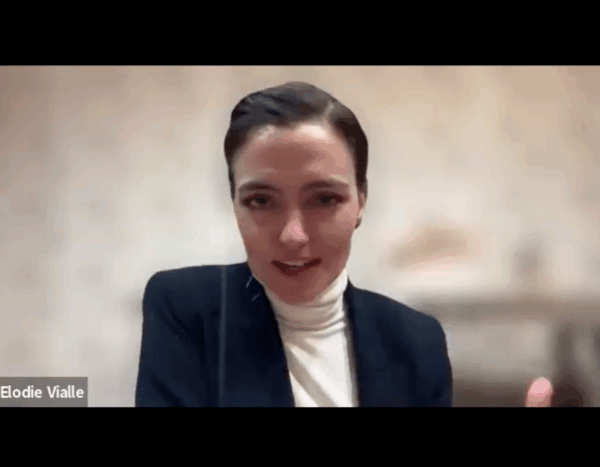
“Privacy for Populations at Risk: Supporting Journalists Facing Online Attacks,” Elodie Vialle, international journalist and human rights activist
In a cross-Atlantic conversation, Vialle and Lynette Clementson, the Charles R. Eisendrath Director of Wallace House Center for Journalists shined a light on the many digital threats journalists and news organizations face – from surveillance and doxxing to hacking and cyber mobbing, with very real potential harms including incarceration or death. They discussed important measures that are needed to keep journalists and the press protected.
“Exploring Digital Privacy from a Child’s Perspective,” Lauren Girouard, postdoctoral research fellow at Harvard University & the University of Michigan
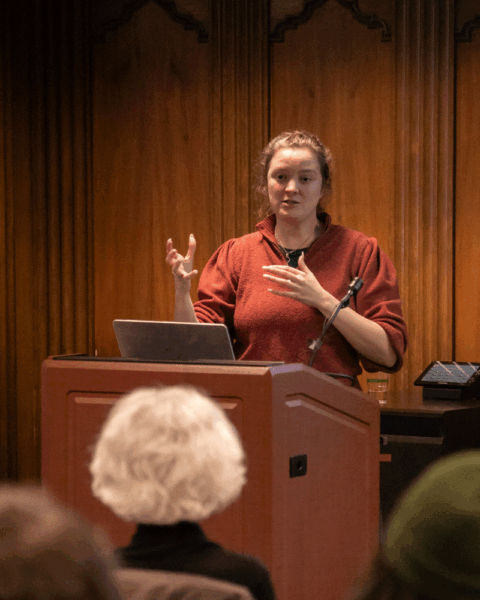
Dr. Girouard explored children’s evolving attitudes towards technology and privacy, and the complexities of keeping children safe online due to distributed responsibilities among parents, teachers, government, and companies. She pointed out the commercial interests in capturing children’s attention and the deficient regulatory framework in place to protect them.
“Interrogating the Quiet Escalation of Tech Billionaire Influence on Detroit’s Future,” Chris Gilliard, privacy researcher, and Tawana Petty, artist and organizer
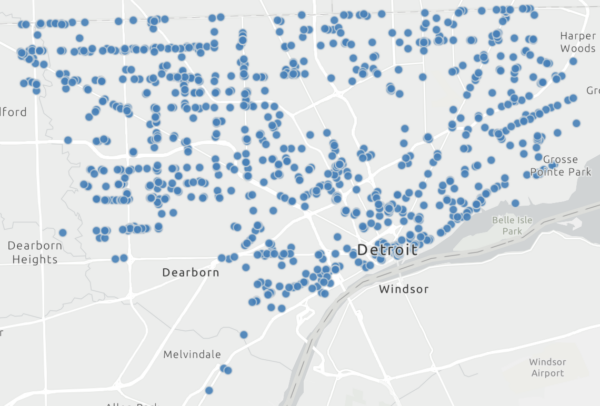
Petty highlighted the difference between being “seen” and being “surveilled” with examples from Detroit and Project Green Light. Dr. Gilliard described the impacts of surveillance technologies on communities, including “luxury surveillance,” e.g. wearable devices. They described the importance of making surveillance harms more visible to individuals and society by asking questions, being active, and listening to and investing in local communities. Petty performed her poem “Dear Detroit” (read on the event page). Both speakers emphasized the need for community involvement in government surveillance practices and the need for everyone to consider raising their voice in favor of privacy.
An audio recording of “Interrogating the Quiet Escalation of Tech Billionaire Influence on Detroit’s Future” will be available soon.
“The Case for Hope in Dystopian Times,” Albert Fox Cahn, founder in residence of the Surveillance Technology Oversight Project (S.T.O.P.)
Fox Cahn walked the audience through the once-invisible harms of government surveillance and how they have been countered by litigation, legislation, and grassroots organizations. He noted reasons for hope, pointing to groups defending the rights of targeted populations that are winning in courts across the U.S. His optimism stems from society’s growing awareness of surveillance and the work of “unsung upgraders” of technology highlighted in his newly published book, “Move Slow and Upgrade: The Power of Incremental Innovation (Cambridge Press).
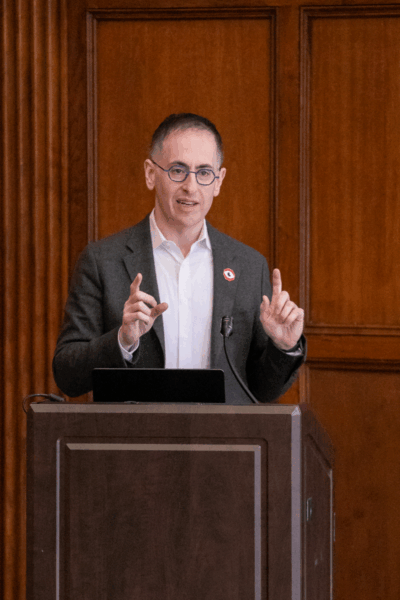
“A Conversation with Cindy Cohn,” Cindy Cohn, executive director of the Electronic Frontier Foundation
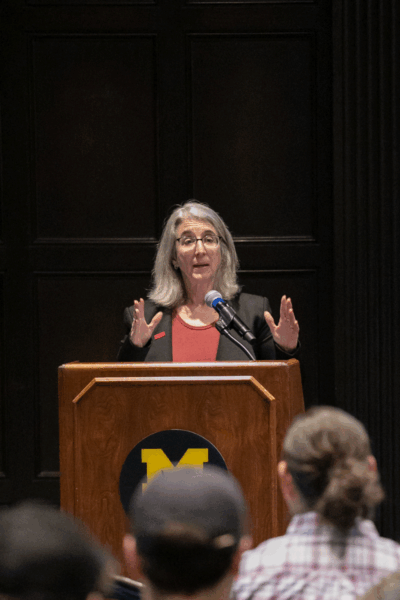
Cohn read excerpts from her recently published book, “Privacy’s Defender: My Thirty-Year Fight Against Digital Surveillance” (MIT Press). She wove her personal story with her lived experience fighting battles in court over the years, particularly in the 1990s: for encryption technology, to stop mass spying by the government, and to end national security subpoenas. She exhorted the audience to remember that “Privacy is a check on power” and offered ways to join the fight for privacy rights, adding, “Privacy needs a posse.” Following her presentation in Ann Arbor, Cohn made an appearance on The Daily Show in New York.
Unveil Student Art Contest Exhibition
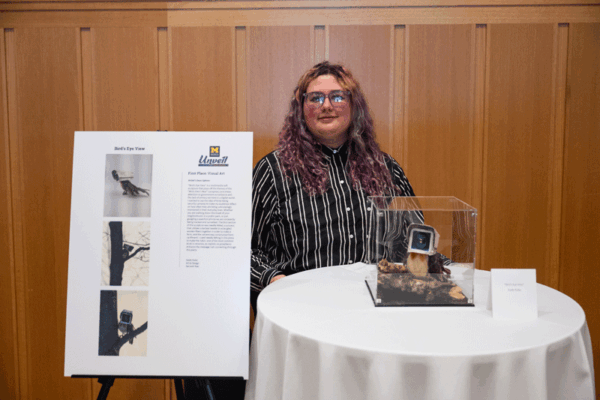

This winter, Privacy@Michigan expanded its repertoire with an inaugural student art contest: Unveil. The contest culminated with a celebration on March 27 of the winning artists and an exhibition of their works as they explored privacy, surveillance, civil liberties, and individual rights through literary and visual arts. Winners came from a wide variety of academic disciplines, reminding us that art, like privacy, is for everyone. Families, friends, and members of the U-M arts community attended the event (featured in the “Michigan Daily”).
Visit the Unveil Winners Gallery to view the artworks and artists’ descriptions.
Stay tuned on the Safe Computing website for next year’s Privacy@Michigan events.


